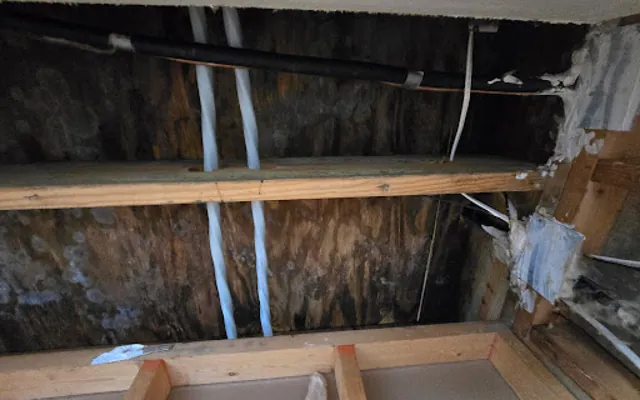
San Jose attics hold roof framing, insulation, and often an HVAC air handler all in one enclosed space, so water from a cracked roof seal, a clogged condensate line, or a wind-driven storm can soak insulation and framing before it ever shows as a ceiling stain below. A crew typically arrives within the hour to assess and dry the space.

A real person answers any hour, and a crew is typically at a San Jose home in about an hour to get into the attic and identify the source and extent of the water.
Thermal imaging and moisture meters trace how far water has spread across insulation, roof decking, and framing, and into the ceiling drywall below.
Saturated insulation is removed since it rarely dries effectively in place, along with any stained ceiling drywall or compromised framing sections identified along the way.
Air movers and dehumidifiers dry the attic space and ceiling cavity to a verified moisture target, with the original source, roof, HVAC, or storm, flagged for permanent repair.

While help is on the way, these first steps, done only where it is safe, limit the damage and protect the insurance claim.
Shut the supply off at the source, or close the home's main valve if the source is not obvious. Stopping the flow limits the damage more than anything else.
Switch off electricity to the affected area, but only if the breaker can be reached without standing in or touching the water.
Get a crew dispatched right away. The sooner extraction and drying begin, the more flooring, drywall, and belongings can be saved.
Take photos and a short video of the water and the affected rooms before anything is moved, so the insurance claim starts strong.
Attic water damage restoration in San Jose typically runs from about $600 to $2,800, depending on how much insulation has to be replaced and whether roof decking or framing was affected. A contained leak caught within days of a small stain sits on the low end; a leak that soaked a wide area of insulation and reached framing sits higher. Repairing the roof or HVAC source is billed separately by the relevant contractor; this service covers drying and restoring the attic and ceiling water damage.
Crews reach San Jose, Santa Clara County, and the nearby South Bay fast, from Downtown, Willow Glen, and Rose Garden to Japantown, North San Jose, Santa Clara, Campbell, and Milpitas. See the full list on the areas served across San Jose page.
See all areas servedEvery loss is photographed, measured, and logged from the first visit, so the paperwork holds up with the insurance carrier.
Technicians follow recognized IICRC drying standards and prove it with daily moisture readings on San Jose homes, not guesswork.
Emergency dispatch any hour of the day or night, with a real crew on the way across the South Bay, not a callback in the morning.
A real crew dispatched any hour, not a callback in the morning.
Trained technicians following recognized IICRC drying standards.
Truck-mounted, portable, and submersible for any size loss.
The loss is documented and billed to the carrier directly.
A yearly check before the winter storm season, plus a look after any major storm, is a reasonable habit for San Jose homeowners, since attic leaks often go unnoticed between visits.
Cracked roof flashing or sealant after a long dry summer, wind-driven rain during winter storms, and clogged HVAC condensate lines from an attic-mounted unit are the most frequent sources.
Almost always, yes. Insulation holds moisture against surrounding materials and rarely dries effectively in place, so it's typically removed and replaced rather than dried.
Sudden storm-related water intrusion is often covered by homeowners insurance. Damage from a long-neglected leak may be treated differently, so documentation of when it was found matters.
Yes, if a leak goes on long enough. Roof decking and rafters can absorb moisture over time, which is why moisture mapping checks framing, not just insulation and drywall.
San Jose crews are on call 24 hours a day, local and fast, and can be on the way within the hour.
Call (669) 587-9723