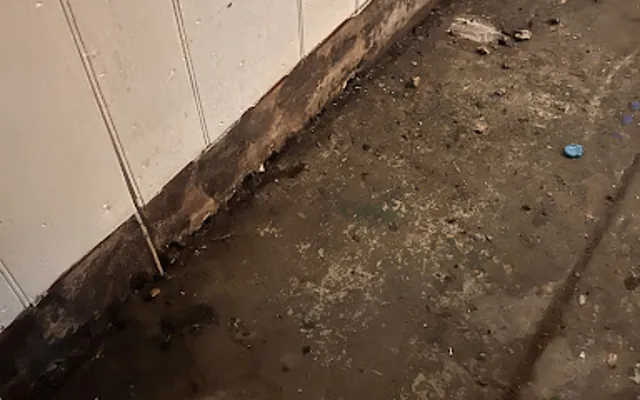
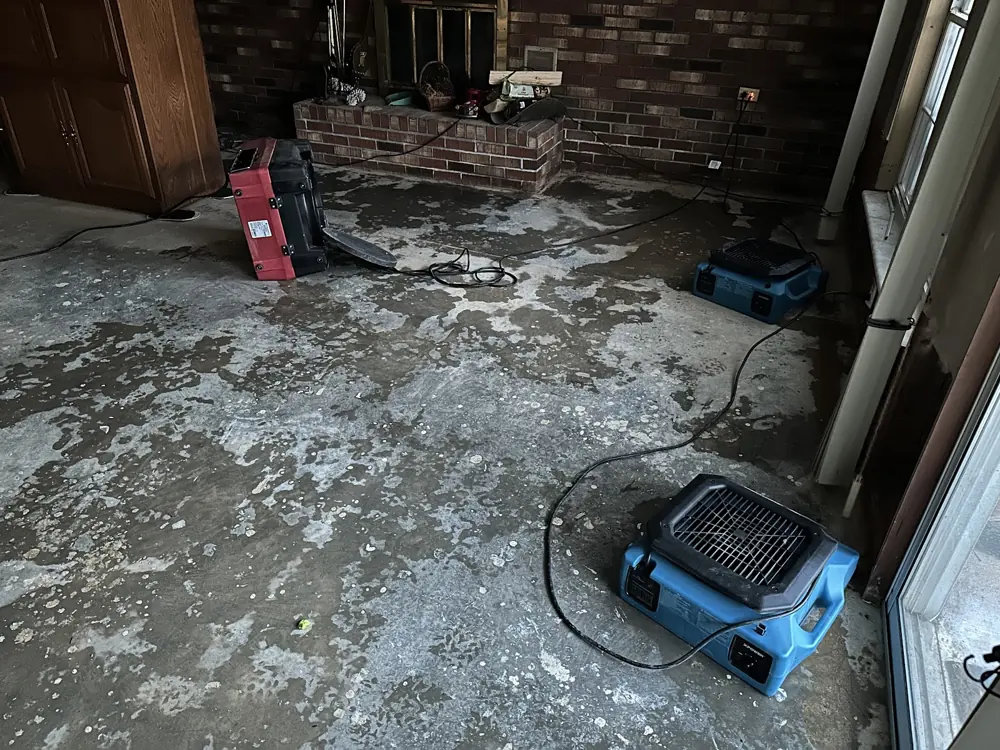
A toilet overflow can put water across a bathroom floor and into the hallway or the room below in minutes, and it needs to be treated carefully depending on what caused it. Crews respond 24/7 and are typically on site within the hour.

A crew arrives within about an hour and determines whether the overflow was clean water from a clog or contaminated water from a backup.
Standing water is extracted from the bathroom floor and any adjoining rooms it reached, with contaminated water handled under category 3 protocols.
Flooring and, if the bathroom is upstairs, the ceiling below are checked for trapped moisture and opened where needed.
Surfaces are cleaned and disinfected as needed, and air movers and dehumidifiers run until moisture readings confirm the area is dry.

While help is on the way, these first steps, done only where it is safe, limit the damage and protect the insurance claim.
Shut the supply off at the source, or close the home's main valve if the source is not obvious. Stopping the flow limits the damage more than anything else.
Switch off electricity to the affected area, but only if the breaker can be reached without standing in or touching the water.
Get a crew dispatched right away. The sooner extraction and drying begin, the more flooring, drywall, and belongings can be saved.
Take photos and a short video of the water and the affected rooms before anything is moved, so the insurance claim starts strong.
Toilet overflow cleanup in San Jose typically runs from about $300 to $2,500, depending on whether the water was clean or contaminated, how long it sat, and whether it reached a ceiling below or an adjoining room. A quickly caught clean-water overflow sits on the low end; a contaminated backup that soaked into subfloor or spread to a lower ceiling sits on the high end. Sudden overflows are commonly covered by homeowner insurance, and the work is documented for the claim.
Crews reach San Jose, Santa Clara County, and the nearby South Bay fast, from Downtown, Willow Glen, and Rose Garden to Japantown, North San Jose, Santa Clara, Campbell, and Milpitas. See the full list on the areas served across San Jose page.
See all areas servedEvery loss is photographed, measured, and logged from the first visit, so the paperwork holds up with the insurance carrier.
Technicians follow recognized IICRC drying standards and prove it with daily moisture readings on San Jose homes, not guesswork.
Emergency dispatch any hour of the day or night, with a real crew on the way across the South Bay, not a callback in the morning.
A real crew dispatched any hour, not a callback in the morning.
Trained technicians following recognized IICRC drying standards.
Truck-mounted, portable, and submersible for any size loss.
The loss is documented and billed to the carrier directly.
Not always. An overflow caused by a simple clog in the bowl itself is usually clean or lightly contaminated water, while a backup pushed up from further down the sewer line is treated as category 3 and cleaned up differently.
Shutting off the water supply valve at the base of the toilet stops the flow quickly. After that, extraction should start as soon as possible, especially if the bathroom sits above another room.
Often, yes, if extraction and drying start quickly. Subfloor that has been saturated for an extended period, especially with contaminated water, is more likely to need replacement.
Sudden overflows are commonly covered under a standard homeowner policy, though coverage can depend on whether the cause was considered a maintenance issue. Documentation of the source and timeline helps support the claim.
If water has soaked through the subfloor into a ceiling below, a small controlled access point is typically opened to drain trapped water and check the extent of the damage before that section is dried or repaired.
San Jose crews are on call 24 hours a day, local and fast, and can be on the way within the hour.
Call (669) 587-9723