Sump pumps are not standard in most San Jose homes, but the ones installed in low-lying properties and some crawlspaces do the same critical job, and a failure during a storm can mean water accumulating fast. Crews respond 24/7 and are typically on site within the hour.

A crew responds any hour, especially during active storms, and checks the affected area for electrical hazards before entry.
Submersible pumps and wet vacuums remove accumulated water from the crawlspace or low-lying space while the failed pump is bypassed.
The sump pit itself is cleared and inspected to determine whether the pump, float switch, or power supply caused the failure.
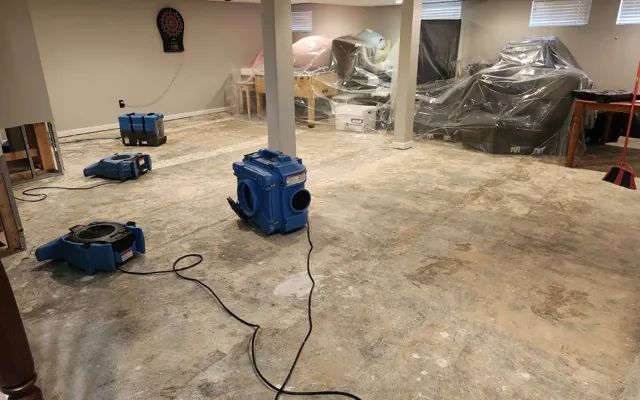
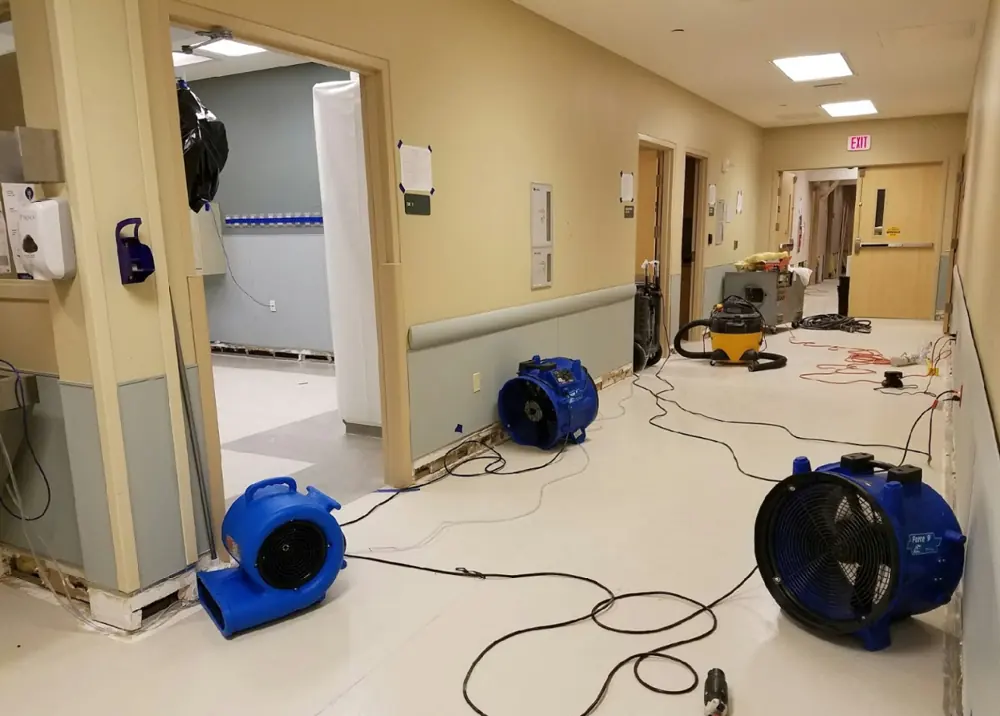
Dehumidifiers and air movers run until moisture readings in the affected space confirm it is dry, with the pump flagged for repair or replacement.

While help is on the way, these first steps, done only where it is safe, limit the damage and protect the insurance claim.
Shut the supply off at the source, or close the home's main valve if the source is not obvious. Stopping the flow limits the damage more than anything else.
Switch off electricity to the affected area, but only if the breaker can be reached without standing in or touching the water.
Get a crew dispatched right away. The sooner extraction and drying begin, the more flooring, drywall, and belongings can be saved.
Take photos and a short video of the water and the affected rooms before anything is moved, so the insurance claim starts strong.
Sump pump failure cleanup in San Jose typically runs from about $500 to $2,800, depending on how much water accumulated before the failure was noticed and how much subfloor insulation or flooring was affected. A failure caught within an hour or two during a storm sits on the low end; a pump that failed unnoticed overnight in a low-lying property sits on the high end. Pump replacement itself is generally handled separately by a plumber, and sudden water accumulation is often covered by insurance depending on the policy.
Crews reach San Jose, Santa Clara County, and the nearby South Bay fast, from Downtown, Willow Glen, and Rose Garden to Japantown, North San Jose, Santa Clara, Campbell, and Milpitas. See the full list on the areas served across San Jose page.
See all areas servedEvery loss is photographed, measured, and logged from the first visit, so the paperwork holds up with the insurance carrier.
Technicians follow recognized IICRC drying standards and prove it with daily moisture readings on San Jose homes, not guesswork.
Emergency dispatch any hour of the day or night, with a real crew on the way across the South Bay, not a callback in the morning.
A real crew dispatched any hour, not a callback in the morning.
Trained technicians following recognized IICRC drying standards.
Truck-mounted, portable, and submersible for any size loss.
The loss is documented and billed to the carrier directly.
No. Because true basements are rare and most homes sit on slab or raised foundations, sump pumps are only found in a smaller number of low-lying properties or crawlspaces with a known groundwater history.
Power outages during storms, a stuck or failed float switch, a clogged intake, or simple pump wear are the most common causes. A backup power source or battery system can help prevent storm-related failures.
It depends on the site's groundwater conditions and the storm intensity, but a property that relies heavily on its sump pump can see several inches of standing water within hours of a failure during a strong storm.
Coverage varies by policy. Some homeowner policies exclude water backup or sump failure unless a specific endorsement was added, so it is worth checking the exact policy language.
The cleanup crew focuses on extraction, moisture mapping, and drying, and flags the likely cause of the pump failure. Repair or replacement of the pump itself is typically scheduled with a plumber.
San Jose crews are on call 24 hours a day, local and fast, and can be on the way within the hour.
Call (669) 587-9723